PVC Ball Valves Complete Technical Guide
FIELD-LEVEL GUIDE
For Engineers, Installers & Specifiers
Comprehensive technical specifications, installation guidance, and selection criteria for PVC ball valves in industrial and residential applications.
Technical Contents
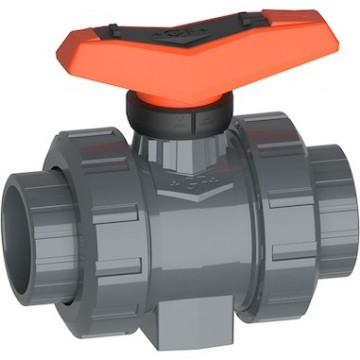
+GF+ Type 546 PVC Ball Valve, Schedule 80.
How PVC Ball Valves Work
PVC ball valves operate using a simple yet effective quarter-turn mechanism. At the heart of the valve is a hollow, perforated sphere (the "ball") that rotates within the valve body to control fluid flow.
When the valve handle is in the open position, the ball's bore aligns with the pipe, allowing unrestricted flow. A 90-degree turn of the handle rotates the ball so that the solid portion blocks the flow path, completely stopping fluid movement.
SPECINFO™ Critical Component: Valve Seats
The ball is held in place by two seats—typically made of PTFE (Teflon), EPDM rubber, or other fluoropolymer materials depending on the application—that create a tight seal around the ball. These seats are compressed against the ball by the valve body, ensuring leak-free operation even under pressure.
PVC ball valves can be either "floating ball" or "trunnion-mounted" designs. In floating ball valves, the ball moves slightly downstream when pressure is applied, pressing against the downstream seat for enhanced sealing. Trunnion-mounted designs, used in larger sizes, support the ball with upper and lower bearings for more stable operation under high pressures.
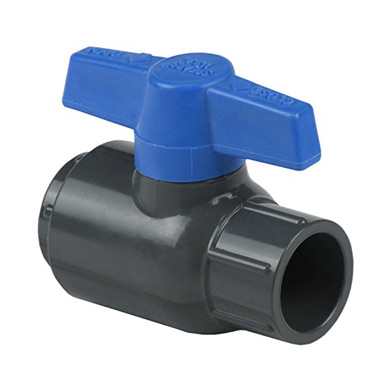
Spears 1/2 in Slip PVC Utility Ball Valve, Schedule 80 bore.
Common Applications
PVC ball valves serve critical roles across numerous industries and applications due to their chemical resistance and reliability:
Residential & Commercial
- •Main water line shutoffs and isolation valves
- •Pool and spa circulation systems
- •Irrigation and sprinkler system controls
- •Water heater connections and bypass lines
Industrial & Process
- •Chemical feed and dosing systems
- •Water treatment and filtration plants
- •Laboratory water and chemical handling
- •Food and beverage processing equipment
- •HVAC and cooling tower applications
Agricultural & Irrigation
- •Farm irrigation distribution networks
- •Greenhouse misting and climate control
- •Livestock watering systems
- •Fertilizer and chemical application equipment
Advantages vs. Metal Ball Valves
PVC ball valves offer several compelling advantages over their metal counterparts, making them the preferred choice in many applications:
✓ Chemical Resistance
PVC is inherently resistant to acids, bases, salts, and many organic compounds that would corrode metal valves. Ideal for chemical processing and water treatment applications.
$ Cost Effectiveness
Significantly lower material and manufacturing costs compared to stainless steel or brass alternatives, while offering comparable performance in appropriate applications.
⚡ Ease of Installation
Lightweight construction and simple connection methods (socket, threaded, or flanged) make installation faster and require fewer specialized tools.
🔒 No Corrosion
Unlike metal valves, PVC valves never rust, scale, or suffer from galvanic corrosion, ensuring consistent performance over decades of service.
Important Limitations
However, PVC valves do have limitations compared to metal valves, including lower temperature ratings, reduced pressure capabilities, and potential for UV degradation if exposed to direct sunlight.
Technical Considerations
Pressure Ratings
PVC ball valve pressure ratings vary significantly by size, construction, and manufacturer. Typical Schedule 40 PVC ball valves are rated for:
- ½" to 1": 200-235 PSI at 73°F
- 1¼" to 2": 200-235 PSI at 73°F
- 2½" to 4": 150-200 PSI at 73°F
- 6" and larger: 150 PSI at 73°F
Note: Always verify specific pressure ratings with manufacturer specifications, as ratings can vary between brands and valve designs.
Temperature Limitations
Most PVC ball valves are typically rated for continuous service up to 140°F (60°C), though some manufacturers specify ranges from 120°F to 150°F. Higher temperatures cause:
- ⚠Reduced pressure ratings (derating required)
- ⚠Potential seal degradation
- ⚠Thermal expansion concerns
- ⚠Risk of permanent deformation
Schedule 40 vs. Schedule 80
SPECINFO™ Definition: "Schedule"
"Schedule" refers to the wall thickness of the pipe or valve body.
Higher schedule = thicker walls = higher pressure rating, but also more weight and cost.
SPECINFO™ Schedule 40 PVC Ball Valves
| Use Case | Residential plumbing, irrigation, light commercial |
| Wall Thickness | Thinner walls than Schedule 80 |
| Weight | Lighter, easier to handle |
| Cost | Less expensive |
| Pressure Rating | ~150–235 PSI @ 73°F |
| Connections | Socket, Threaded, Compact True Union |
| Durability | Less resistant to mechanical stress |
| Temperature | Up to 140°F (60°C) |
SPECINFO™ Schedule 80 PVC Ball Valves
| Use Case | Industrial systems, chemical handling, lab piping |
| Wall Thickness | Thicker walls — higher strength |
| Weight | Heavier due to material mass |
| Cost | More expensive than Schedule 40 |
| Pressure Rating | ~150–250 PSI @ 73°F |
| Connections | Full-featured true union bodies |
| Durability | Higher resistance to impact & cycling |
| Temperature | 140°F max, better under stress |
SPECINFO™ Detailed Pressure Ratings by Size
| Valve Size | Schedule 40 (PSI @ 73°F) |
Schedule 80 (PSI @ 73°F) |
Common Applications |
|---|---|---|---|
| ½" | 200-235 | 225-250 | Residential water lines, small process lines |
| ¾" | 200-235 | 225-250 | Irrigation, pool plumbing |
| 1" | 200-235 | 225-250 | Main supply lines, chemical feed |
| 1¼" | 200-230 | 220-245 | Commercial distribution, process systems |
| 1½" | 200-230 | 220-245 | Water treatment, larger irrigation zones |
| 2" | 180-200 | 200-230 | Industrial process, large pool systems |
| 3" | 150-180 | 180-200 | Municipal water, large process lines |
| 4" | 150-175 | 170-190 | Water treatment plants, large industrial |
| 6" | 150 | 150-170 | Municipal mains, large industrial process |
SPECINFO™ Technical Note
Pressure ratings vary by manufacturer and valve design. Always verify with specific product documentation. Ratings decrease with higher temperatures.
SPECINFO™ Service Life Expectations
Actual longevity depends on factors like pressure cycling, chemical exposure, UV protection, and installation quality. Valve seats and seals may require replacement before the valve body in high-frequency or aggressive applications.
Connection Types
Socket (Slip)
Glued connections using PVC cement, permanent installation
Threaded (NPT)
Removable connections, may require thread sealant
Flanged
Bolted connections for larger sizes and high-pressure applications
True Union
Dismountable design allowing valve removal without cutting pipes
Top Manufacturers
Several manufacturers have established reputations for quality PVC ball valves. These companies offer products that meet or exceed industry standards:
Spears Manufacturing
Leading producer of PVC valves and fittings with extensive industrial applications focus.
Hayward Flow Control
Specializes in plastic valves and actuators for water treatment and industrial processes.
Georg Fischer (GF)
Swiss-based manufacturer known for high-quality plastic piping systems and valves.
NIBCO
American manufacturer offering comprehensive lines of PVC valves and fittings.
Lasco Fittings
Provides reliable PVC ball valves for plumbing and irrigation applications.
Disclaimer: This website is not affiliated with any of the manufacturers mentioned. Information provided is for educational purposes only. Always consult manufacturer specifications for specific applications.
Frequently Asked Questions
Can PVC ball valves handle hot water?
Most PVC ball valves can handle hot water up to 140°F (60°C) at full pressure rating, though ratings vary by manufacturer. For temperatures above 100°F, pressure ratings typically require derating (reduction). For continuous hot water service above 140°F, consider CPVC (chlorinated PVC) ball valves, which are typically rated for temperatures up to 200°F (93°C). Always consult manufacturer derating charts for specific temperature/pressure combinations.
How long do PVC ball valves last?
With proper installation and within rated operating conditions, most manufacturers estimate PVC ball valves will provide 20-25 years of reliable service. Actual lifespan depends on factors such as operating pressure, temperature cycling, chemical exposure, and frequency of operation. The valve seats (typically PTFE or EPDM) may require replacement before the valve body in high-cycle applications or harsh chemical environments.
Are PVC ball valves suitable for potable water?
Yes, PVC ball valves meeting NSF/ANSI 61 standards are approved for potable water systems. Look for NSF certification marks on the valve body. These valves have been tested to ensure they don't leach harmful substances into drinking water and meet strict health and safety requirements.
What's the difference between full port and standard port valves?
Full port (full bore) ball valves have an internal diameter equal to the pipe size, providing unrestricted flow with minimal pressure drop. Standard port valves have a smaller internal diameter (typically one pipe size smaller), creating some flow restriction but at a lower cost. Choose full port for applications where pressure drop must be minimized.
Can PVC ball valves be automated?
Yes, PVC ball valves can be equipped with pneumatic, electric, or hydraulic actuators for automated operation. The valve must have a suitable mounting pad (ISO 5211 standard) for actuator attachment. Automated PVC ball valves are commonly used in water treatment plants, irrigation systems, and process control applications.
Buying Tips – What to Look For
Selecting the right PVC ball valve requires a technical understanding of system conditions, connection compatibility, and material performance. Below are key considerations to ensure long-term reliability and proper fit for your application:
Size and Connection Type
- •Match valve size to pipe diameter to maintain proper flow rate and minimize pressure drop
- •Select the correct connection style based on application needs
Connection Types:
Solvent-welded connections for permanent joints
Reusable threaded connections (NPT standard in North America)
Bolted connections, common in large or high-pressure systems
Allows valve removal without cutting pipe — ideal for maintenance
Pressure and Temperature Compatibility
- •Ensure valve pressure rating exceeds your system's maximum operating pressure
- •Account for pressure surges, water hammer, or dynamic flow conditions
- •Verify that the valve's temperature rating supports continuous and peak operating temperatures
- •Apply proper derating for elevated temperatures — most PVC valves are rated at 73°F and derate above 100°F
Material Certifications
For applications involving potable water, chemical compatibility, or regulated environments, confirm relevant material and quality certifications:
- NSF/ANSI 61: Approved for contact with drinking water
- ASTM D2464: Specification for threaded PVC fittings
- ASTM F1970: Standard for PVC plastic valves
- ISO 9001: Quality management system compliance
Quality Indicators
- •Smooth actuation with minimal torque required
- •Valve body should be free of flashing, voids, or irregular mold seams
- •High-grade handle construction with UV resistance if used outdoors
- •Clearly molded or printed pressure and temperature specs on valve body
- •Availability of replaceable internal components (seats, seals, O-rings)
Maintenance Considerations
While PVC ball valves are typically low-maintenance, system longevity and uptime can be improved by evaluating support factors:
- •Availability of replacement parts (O-rings, seals, handles)
- •Manufacturer or distributor warranty coverage and return policy
- •Access to local technical support or documentation
- •Availability of clear installation and maintenance guides